
ruID: New Rules for Labor Migrants Entering Russia
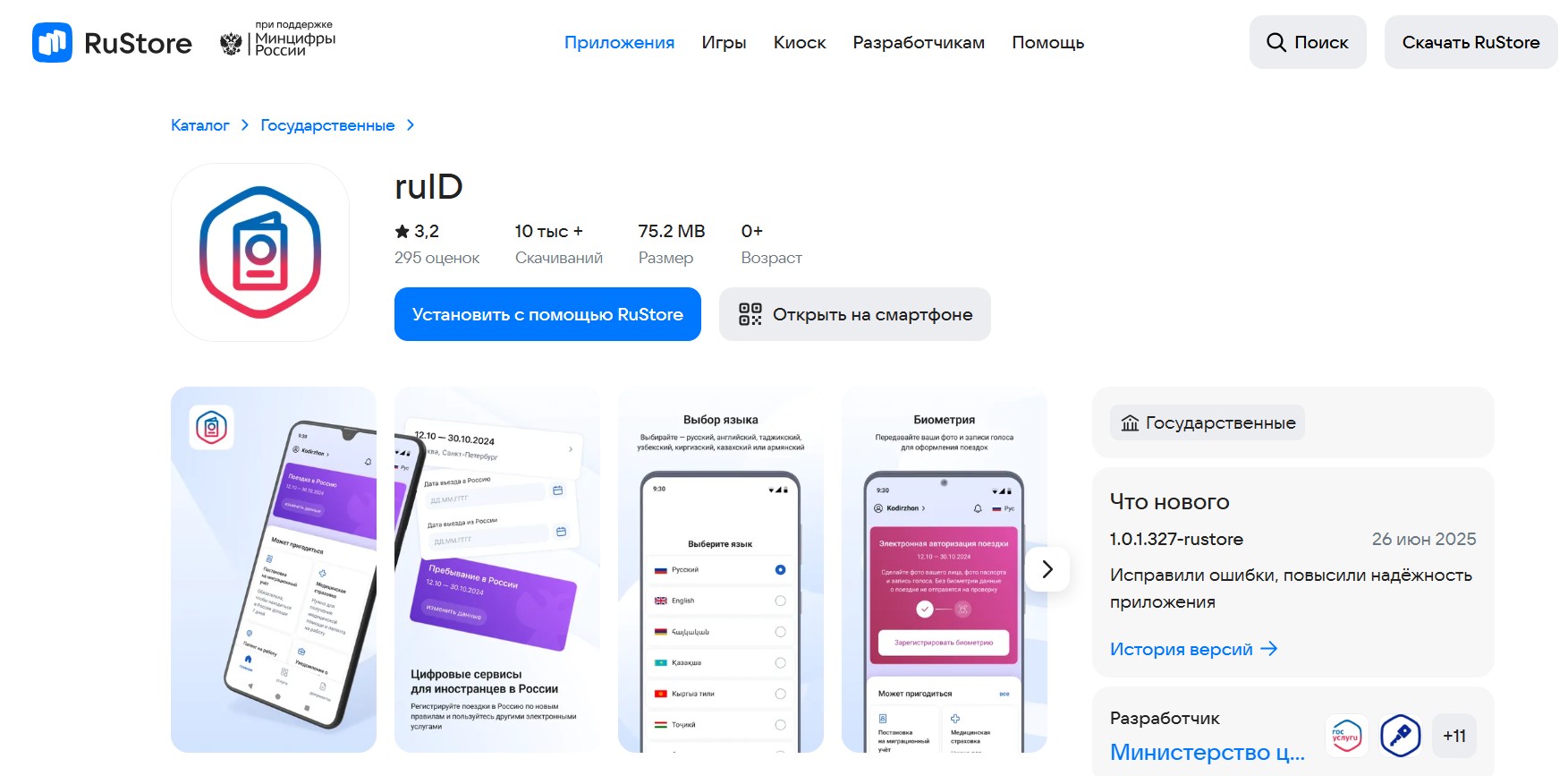
As of June 30, new entry regulations for foreign nationals arriving in Russia under a visa-free regime will take effect. These rules mandate registration via the ruID mobile application and submission of an entry application no later than 72 hours prior to arrival. The regulations are part of an experimental initiative by the Russian Ministry of Digital Development to digitize and automate the registration of foreign nationals entering Russia.
Foreign nationals entering Russia under a visa-free regime are required to:
· Download the ruID mobile application;
· Register in the application and create a digital profile (an email address can be used; a Russian mobile phone number is not mandatory);
· Submit an entry application through the app;
· Obtain a QR code via the app, which must be presented at border control.
· To submit an application through the app, the following steps are required:
· After installing the app and creating a profile, upload a photograph and enter passport details;
· Complete an electronic application, specifying the duration of the visit and the regions of Russia to be visited;
· Upload a photo of the passport, a photo of the applicant’s face, and three voice recordings;
· Await verification of the submitted data and confirm there are no restrictions on entry.
For children aged 6 to 18, the application must be submitted by parents or guardians who have already obtained authorization.
Creating a digital profile through the ruID app enables foreign nationals to access a range of government services, as the profile is integrated with the Russian “Gosuslugi” (Public Services) portal.
The new rules do not apply to citizens of Belarus, children under 6 years of age, diplomats and employees of foreign diplomatic missions and consular offices in Russia, employees of international organizations and their accredited representations in Russia, or their family members. The rules also do not apply to foreign nationals entering Russia with a visa.
At present, creating a digital profile is not mandatory for foreign nationals. The experiment involves migrants entering Moscow and the Moscow Region who work under a labor patent or are permitted to work without a patent in accordance with Russian laws or international agreements. The experiment also includes migrants staying in the region for more than 90 days for non-work-related purposes.
GCTU News
-
Victor Pinsky:"总工会同盟会理事会在杜尚别的会议是独立国家联合体整个工会运动的里程碑事件"。
塔吉克斯坦杜尚别2026年7月1日--国家杜马监管和确保国家杜马活动委员会主席、总工会同盟会秘书长Victor Pinsky 召集了总工会同盟会理事会会议,会议于7月1日在杜尚别举行,这是独立国家联合体工会的里程碑事件。
-
Victor Pinsky 会见了塔吉克斯坦议会代表。
6月30日,塔吉克斯坦杜尚别--俄罗斯联邦国家杜马委员会主席、总工同盟合会秘书长 Victor Pinsky 与塔吉克斯坦共和国"Majlisi namoyandagon Majlisi Oli "Mahmadshoh Gulzada 达国际事务、公共协会和新闻委员会主席举行会议,讨论了以独联体形式制定劳动模范的工作。 今天在塔吉克斯坦议会杜尚别举行的会议,塔吉克斯坦议会的其他成员也出席了会议:环境委员会主席 Orif Amirzoda、议会道德委员会成员Naima Solizoda、塔吉克斯坦独立工会联合会主席 Karakhon Chillazoda 和总工会同盟会副秘书长Margarita Usova 。
-
Victor Pinsky会见了塔吉克斯坦劳动部副部长。
6月30日,塔吉克斯坦杜尚别--独立国家联合体成员国共同劳动力市场的逐步形成和劳动力移民监管成为俄罗斯联邦国家杜马委员会主席、总工会同盟会秘书长 Victor Pinsky与塔吉克斯坦共和国劳动、移民和就业部副部长 Sharif Norzoda 会议的主要议题。此外,塔吉克斯坦独立工会联合会主席(塔吉克斯坦独立工会联合会)参加了会议Karakhon Chillazoda,总工会同盟会副秘书长Margarita Usova,塔吉克斯坦独立工会联合会副主席Ismail Fayzizoda和塔吉克斯坦独立工会联合会审计委员会主席Dilmurod Davlatzoda。