
New Minimum Wage Campaign: Current Tasks of the General Confederation of Trade Unions Discussed at Meetings of the Executive Committee and Council of the GCTU
New minimum wage standard
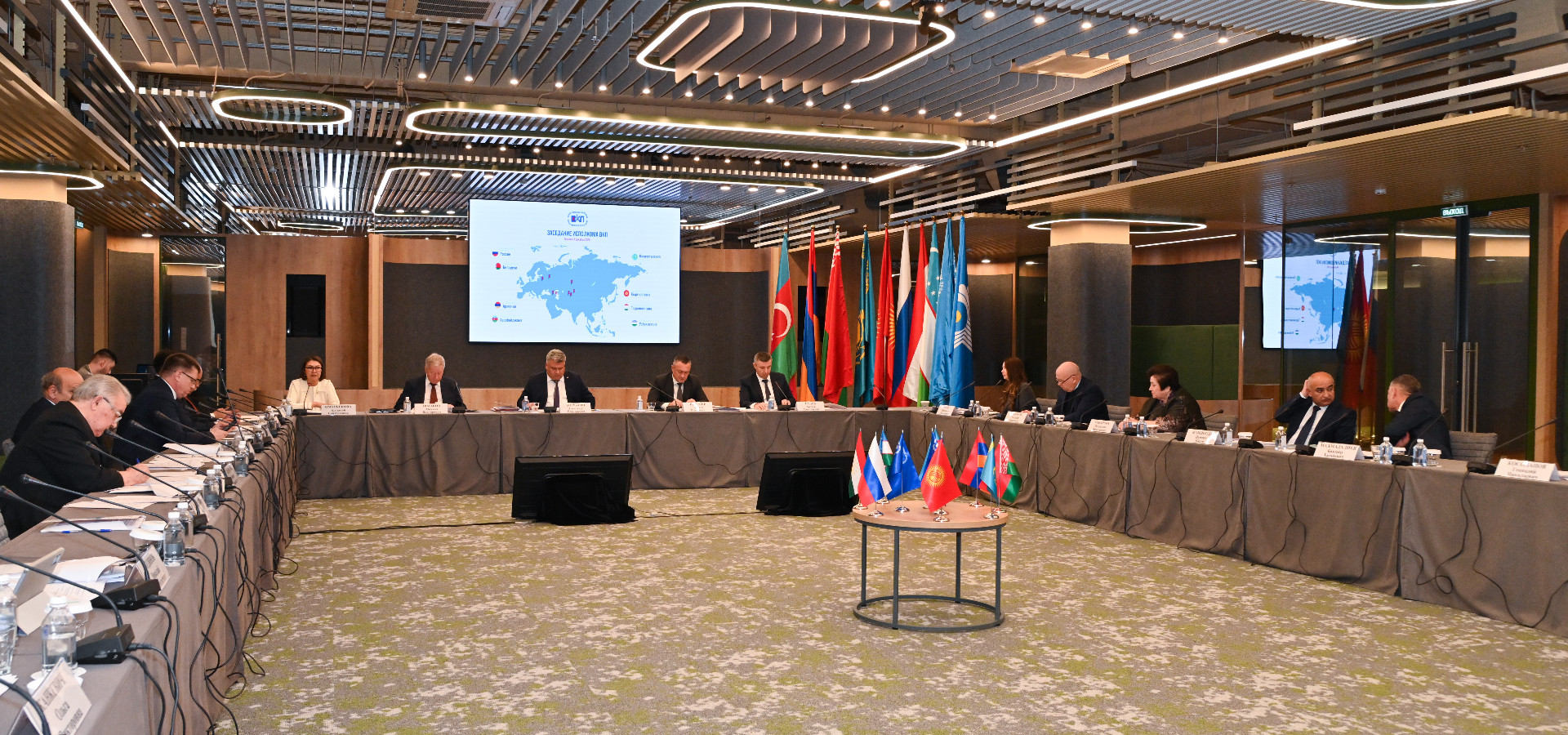
Meetings of the Executive Committee and the Council of the General Confederation of Trade Unions (GCTU) were held in Moscow on December 8. Trade union leaders fr om Armenia, Belarus, Kazakhstan, Kyrgyzstan, Russia, Tajikistan and Uzbekistan discussed current socio-economic issues, achievements and new areas of work of the GCTU.
One of the main issues considered at the meeting of the Executive Committee was the results of the GCTU’s solidarity campaign “Minimum Wage – to Minimum Subsistence Level”. Currently, in many CIS countries, the minimum wage is significantly higher than the subsistence minimum. In Uzbekistan, the minimum wage is almost twice as high as the subsistence minimum; in Russia, the minimum wage will be more than 30% higher than the subsistence minimum starting from January 1, 2026. Members of the Executive Committee of the GCTU are confident that the tendency of increasing wages in CIS countries should continue. In this regard, one need to set a higher minimum wage standard.
“Today, the trade unions of the Commonwealth have a new goal – to ensure that wages take into account real prices and living expenses in each specific country. Therefore, the trade unions are launching a new campaign aimed at increasing the minimum wage to the level of the minimum consumer budget. In other words, to the level that corresponds to the employee’s expenses depending on the prices of basic goods and services,” said Viktor Pinsky, General Secretary of the GCTU and Deputy of the Russian State Duma.
Andrey Shvedov, Vice-President of the GCTU and General Secretary of the Soyuzmetall Trade Union Center, made a report on the results of the trade union campaign. According to the Confederation, over the past 20 years, the minimum wage in Azerbaijan has increased 20 times, in Armenia – 6 times, in Belarus – 5 times, in Kazakhstan – 13 times, in Kyrgyzstan – 28 times, in Moldova – 55 times, in Russia –37 times, in Tajikistan – 143 times, in Uzbekistan – 195 times.
Trade unions of CIS countries propose to revise the methodology for calculating the consumer budget, so that it reflects real costs for a decent life: high-quality food, an up-to-date set of essential goods and services. At the same time, the size of the consumer budget should be indexed following the increases in prices. Members of the Executive Committee noted that in most CIS countries, the indexation of the minimum wage is more active than in previous years. At the same time, trade unions are seeking to exclude compensation and incentive payments from the minimum wage. A number of countries are still negotiating the ratification of international conventions governing remuneration issues. Thus, in 2025, the Majilis of the Parliament of Kazakhstan ratified the Convention of the International Labor Organization No. 131 “On Setting the Minimum Wage”. Members of the Executive Committee believe that the transition to calculating the minimum wage based on the consumer budget will provide a more accurate and fair assessment of the level of minimum income of workers.
“The mechanism of calculating the minimum wage through the consumer budget is more correct and more profitable for employees. At the same time, it is important to develop a correct methodology for calculating and updating the minimum consumer budget. This value should correspond to the actual price level. I think, we will be able to defend this position through social dialogue with the government,” said Murat Mashkenov, Secretary General of the Confederation of Labour of Kazakhstan.
The specific steps, which trade unions plan to take to achieve this goal are fixed in the resolution of the Executive Committee of the GCTU. Thus, the GCTU Commission for the Protection of Social and Economic Interests of Workers and Legal Issues will work out a proposal to initiate the development of a new version of the CIS model law “On the Minimum Consumer Budget” in the CIS Interparliamentary Assembly. The Commission will also consider proposals to formulate new goals and methods for implementing the solidarity campaign aimed at raising the minimum wage based on a higher standard – the minimum consumer budget. The GCTU Commission will also have to make proposals on the name of the new solidarity campaign and the stages of its implementation in the countries of the region.
It is recommended that the national trade union centers of CIS countries and industrial trade union internationals seek to improve the existing methods of calculating the subsistence minimum and the minimum consumer budget based on workers' expenses. The calculation methodology should include the necessary costs for adequate food and an updated list of goods and services. It is necessary to insist on monitoring the composition of the consumer basket and its compliance with the needs of employees, taking into account modern conditions. In addition, the resolution of the Executive Committee specifies the following goals:
- To negotiate within the framework of national social partnership systems on the abolition of income tax on the minimum wage.
- To seek the development and adoption of draft laws on the indexation of citizens’ wages, taking into account the level of inflation.
- To continue fighting against the inclusion of compensation and incentive payments in the minimum wage, and seek to fix the relevant provisions in labor legislation, wh ere they are not yet fixed.
- To seek the ratification of the conventions of the International Labour Organization: No. 131 “On Setting the Minimum Wage”, No. 117 “On the Main Goals and Standards of Social Policy”, No. 102 “On the Minimum Standards of Social Security” – with the subsequent incorporation of their provisions into national legislation.
Trade union science
The report of Margarita Usova, Deputy Secretary General of the GCTU was devoted to educational projects as well as scientific and methodological work of the Confederation. Assistance to the affiliated organizations in developing a comprehensive system of training, retraining and advanced training of trade union personnel as well as implementing educational programs and research projects on the basis of the training centers of the GCTU’s affiliated organizations was included in the Confederation's work plan for the year 2025.
“We have developed a simple and clear structure of the standard educational program of the GCTU, in which the lecture module is formed on the basis of advanced scientific research, the practical module is conducted within the framework of the GCTU’s profile events: seminar-meetings and Commissions of the GCTU. The interactive module moderated by leading experts of the GCTU’s affiliated organizations provides for the exchange of experience by program participants. In addition, the participants can take tests and get certificates,” Margarita Usova said and noted that all training modules are conducted in a remote format. If necessary and at the request of the affiliated organizations, the educational program is realized in person.
The first educational program of the GCTU “Promising Areas of Activity and Development of the Technical Labour Inspections of Trade Unions” was devoted to improving the skills of profile trade union specialists in the field of labour protection. It was attended by 216 specialists from six countries: Belarus, Kazakhstan, Kyrgyzstan, Russia, Tajikistan and Uzbekistan. The participants got access to up-to-date research, got acquainted with the practice of inspections in different countries, and passed mandatory testing. The participants who successfully completed the testing received appropriate certificates. The next educational program of the GCTU, which will be implemented in early 2026, will focus on “Motivating Trade Union Membership”, a topic that is relevant to trade unions in most countries of the world.
The Confederation started developing scientific studies that focus on topics relevant to trade unions in the CIS. The study “Social Dialogue in a Polycentric World: Towards a Decent Work Ecosystem” was prepared in an essay format and posted on the GCTU’s website. This is a comprehensive analysis of significant problems in the social and labour sphere that considers prerequisites for the transformation of social dialogue institutions and identifies growth points for the interaction of social partners in the context of the formation of a common labour market. Together with the scientific community, we have already done certain work on other important topics for trade unions: labour migration and pension provision.
The work continued at a meeting of the GCTU Council. Trade union leaders discussed the implementation of the main activities of the Confederation for the years 2022-2027. Viktor Pinsky, General Secretary of the General Confederation of Trade Unions, presented a report on the GCTU’s international initiatives, joint projects with the national trade union centers of CIS countries, and main plans for the coming years.
The Council members also considered the position of trade unions in the implementation of the occupational risk management system in the workplace in CIS countries, taking into account the assessment of working conditions. Representatives of national trade union centers stressed the need for common approaches to assessing working conditions, protecting workers' health, and improving safety control at work.
Margarita Usova, Deputy General Secretary of the GCTU, presented a report on the modernization of the information policy and development of media resources of the General Confederation of Trade Unions. She said that over the past two years, a large-scale work has been carried out to restructure the information work of the GCTU. The updated GCTU’s information portal has been launched. Materials are also published in English and Chinese. Articles and stories about the activities of the Confederation and its affiliated organizations are published in major print media and covered on television and radio. An active presence in the media space has a positive impact on the image of trade unions in the participating countries.
Single labour market
Altynai Omurbekova, Director of the Department of Labour Migration and Social Protection of the Eurasian Economic Commission, took part in the meeting of the GCTU Council. She stressed the importance of cooperation between the EAEU and the General Confederation of Trade Unions. Cooperation between the parties is based on a Memorandum of Cooperation dated 2013.
Altynai Omurbekova noted that the single labour market of the EAEU meets the interests of all member states of the Union. It gives citizens more opportunities for employment, provides equal social guarantees — under the same conditions and in the same manner as citizens of the State of employment, and creates conditions for legal employment. Today, the number of workers from the EAEU member states working on the territory of other states of the Union exceeds 1 million people. Among the key achievements — the abolition of quotas and work permits, recognition of educational documents, except for doctors and pharmacists, equal rights in the field of pension provision and social insurance. Migrant workers have also the right to join trade unions.
In addition, the speaker talked about practical tools to support labour migration: the “Work without Borders” system, which allows you to look for a job without leaving the country, an annually updated list of popular professions and qualification requirements for them. She also mentioned new initiatives — the Amina pilot project, which is designed for remote migration registration in Moscow and the Moscow Region via an app, and work to expand access to digital public services. At the same time, there are still difficulties in passing the registration procedure when leaving and entering, and when sending migrants’ children to school.
Andrey Pudov, State Secretary and Deputy Minister of Labour and Social Protection of the Russian Federation, spoke at the GCTU Council about the digitalization of public services in the field of labour protection and the development of a system for special assessment of working conditions. The Deputy Minister said that the systematic work of the Ministry is aimed at improving the regulatory framework in the field of labour protection. Preserving the lives and health of workers remains a priority. Special assessment of working conditions plays the most important role in this work. It allows you to objectively assess the situation in the workplace and develop measures to improve it. Today, the system has generated more than 2 million reports, and it has become a large-scale analytical base for monitoring the situation throughout the country.
This system is used to provide public services: accreditation of organizations that provide services in the field of labour protection, certification of specialists for special assessment, formation of a register of organizations that conduct such special assessment. Starting from September 1, 2025, applications for accreditation are submitted exclusively through the Unified Public Services Portal. These measures made it possible to reduce the service delivery time from 25 to 15 business days and reduce the number of required documents. In addition, it became possible to obtain accreditation in the field of special assessment of working conditions in an electronic form without the need for face-to-face service.
Since 2023, a personal account for labour protection has been working, which is already used by more than 120 thousand employers. The service provides employers with a single access to special tools for organizing training, testing knowledge, analyzing the results of the special assessment of working conditions, and generating accident investigation documents.
GCTU News
-
GCTU Discusses Amendments to Confederation’s Charter
On September 15, Moscow hosted a meeting of the Working Group on Preparing Amendments and Additions to the Charter of the General Confederation of Trade Unions (GCTU) at the Trade Unions Palace of Labor. Participants reviewed proposals from member organizations regarding necessary changes to the Confederation’s founding document.
-
Wage Standards in the CIS Must Reach a New Level
On September 10, the General Confederation of Trade Unions (GCTU) launched the development of a unified methodology for calculating the minimum consumer budget. The first meeting of the GCTU Executive Committee’s temporary working group on this initiative took place in Moscow.
-
A Unified Registry of Collective Agreements Should Be Established in the CIS
A unified registry of collective agreements in the Commonwealth of Independent States (CIS) will enable the regulation of labor relations at a cross-border level, according to the General Confederation of Trade Unions. The proposal by GCTU to include the creation of such a registry in the draft Plan of Activities for the Year of Social Development and Quality of Life in the CIS was approved by participants of the working group of the Advisory Council on Labor, Employment, and Social Protection of the Population of the CIS Member States. The working group meeting took place today at the CIS Executive Committee in Minsk, using video conferencing.